


As I do prior to each and every NCAA Tournament, I will share five fairly basic factors that you can use as a starting point to identify key mismatches and potential upsets in either the first round or further down the line in the bracket.
Those include:
- Unique Schemes
- Turnover Rates
- Free Throw Percentages (and frequencies)
- 3-Point Shooting Splits (with a look at regression candidates)
- Rebounding Splits (with a touch of transition data)
My power rating is my starting point and most important factor, but I spend the most time on understanding each team's statistical profile and how they match up with opponents leading up to the NCAA Tournament.
With a lack of familiarity outside of conference play, matchups and coaching become more emphasized, especially in a much more efficient market following five-plus months of results.
Let's take a look at which teams are likely to zone and/or press the most to get things started ahead of the 2026 NCAA Tournament.

In the Zone
Three seasons ago, only one of the 38 most zone-heavy defenses made the field. That number jumped up to nine in 2024 but fell in the middle last season, with six of the top 38.
Well, this year, we're back to only one with Utah State, which barely made the cut. It's also worth noting the Aggies largely abandoned their 1-3-1 zone over the final four games of the season after UNLV shredded it in an upset victory.
Sadly, none of the predominantly zone defenses made the field, so teams won't have to worry about prepping for the unique looks from the likes of South Alabama, Merrimack, Tulane and Oakland.
For the season, 29% of teams played zone on at least 10% of their defensive possessions, per Synergy. Nine of those squads made the field of 68. Here are their season-long Zone Frequencies and respective Zone Defensive Rating percentile rankings in terms of points per possession allowed.
I'll follow up on this chart with some quick matchup notes.
| Team | Frequency | Zone Defensive Rating |
|---|---|---|
| Troy | 24.0% | 77th percentile |
| Utah State | 19.9% | 90th percentile |
| Miami | 18.0% | 75th percentile |
| SMU | 15.0% | 69th percentile |
| Missouri | 15.8% | 38th percentile |
| Texas A&M | 13.0% | 68th percentile |
| Ohio State | 12.6% | 53rd percentile |
| High Point | 11.9% | 79th percentile |
| Georgia | 10.0% | 80th percentile |
I'm not sure you really want to zone Nebraska, which grades out in the 97th percentile in zone offense. Although, to be fair, the Huskers rarely saw zone this season (55 possessions).
Miami has seen a ton of zone this season (94th percentile) and hasn't been great (46th percentile compared to 88th vs. man). Conversely, Missouri ranks in the 75th percentile against both.
SMU has gone to more zone late in the season to fix some of their defensive woes (especially without B.J. Edwards, who may or may not be at 100%), but it might not be a great idea to zone the RedHawks' electric offense with elite ball movement, spacing and shooting.
Per Synergy, these five tournament teams had the highest points per zone possession among the 333 teams in the country that saw zone on a minimum of 75 possessions:
| Team | Ranking |
|---|---|
| Louisville | 1st |
| Villanova | 3rd |
| Wisconsin | 7th |
| Michigan | 9th |
| St. Mary's | 10th |
I doubt we see much zone from Utah State. I'm also curious to see how much zone Texas A&M mixes in against the Gaels, who grade out at an elite level vs. zone and could sandblast the Aggies on the offensive glass even more in those possessions.
And the worst…
| Team | Ranking |
|---|---|
| Troy | 294th |
| Georgia | 263rd |
| Penn | 249th |
| Howard | 247th |
| UCF | 232nd |
Mick Cronin has actually thrown out more zone this season after barely using it over the past five seasons. Maybe we see some more zone looks vs. UCF, especially if the Bruins aren't at 100% health wise.
Press U
In this year's field, nine teams pressed at least 20% of possessions, led by Texas A&M, which did so at the nation's second-highest rate.
Georgia, Virginia, McNeese and Santa Clara also ranked among the nine most frequent press defenses in the nation.
Here are those clubs and their respective Press Defensive Rating rankings:
| Team | Press Frequency | Press Defensive Rating |
|---|---|---|
| Texas A&M | 40.7% | 52nd percentile |
| Georgia | 35.2% | 75th percentile |
| Virginia | 34.9% | 76th percentile |
| McNeese State | 34.2% | 98th percentile |
| Santa Clara | 33.2% | 55th percentile |
| VCU | 24.7% | 88th percentile |
| St. John's | 23.7% | 67th percentile |
| NC State | 22.8% | 70th percentile |
| Howard | 20.6% | 98th percentile |
Troy, Saint Louis, Villanova and Clemson also pressed at a top-50 rate.
The Johnnies really decreased their press rate at the end of the season, but it's something head coach Rick Pitino could certainly dial up to exploit the major athletic mismatch.
Can the Gaels handle Texas A&M's press? The Aggies have seen their turnover rate decline (6% drop since Feb. 1) precipitously late in the season, which has contributed to a late-season skid.
Can they get back to their takeaway ways against a Saint Mary's team that struggled with the pressure of Santa Clara (the closest league comp to TAMU) a few times this season? We shall see.
Here are the 10 best press offenses in the field in terms of points per possession:
| Team | Ranking |
|---|---|
| Ohio State | 1st |
| High Point | 5th |
| Illinois | 7th |
| Nebraska | 8th |
| Vanderbilt | 9th |
| Idaho | 12th |
| Furman | 13th |
| Texas | 14th |
| UCLA | 16th |
| Georgia | 17th |
Texas having the ability to handle the NC State press with ease could be the deciding factor in a game where stops could come at a premium.
And the 10 worst, who could be particularly prone to blowing late leads:
| Team | Ranking |
|---|---|
| Kansas | 337th |
| Howard | 303rd |
| Iowa | 295th |
| Clemson | 294th |
| VCU | 287th |
| TCU | 275th |
| Houston | 265th |
| BYU | 242nd |
| UConn | 232nd |
| Virginia | 229th |
I'm super curious to see if Clemson increases its press rate against Iowa.
That could really disrupt the Hawkeye offense and lead to some key takeaways in a low-scoring affair, especially considering Bennett Stirtz should have a field day in the half-court against Clemson's super shaky pick-and-roll defense (20th percentile efficiency against PnR ball handlers at an 80% frequency, per Synergy).
Sloppy Joes
On a related note, understanding who can and can't take care of the ball in a tournament setting is vital. That's especially true in the second game of the weekend after only one day of prep for a quick turnaround.
I personally try to avoid overmatched underdogs that cough it up too much — since that can lead to easy buckets and extended runs the other way. For example, that could potentially doom Hawaii and Cal Baptist.
Here are the best and worst tournament Team Turnover Rates on both offense and defense. Please note that some of these could be by design, based on scheme (e.g., drop coverage or packed-in defenses).
Best Turnover Offenses (all in top-15 nationally)
| Team | Rate |
|---|---|
| Arkansas | 12.2% |
| Wisconsin | 12.8% |
| Alabama | 13.0% |
| High Point | 13.0% |
| Houston | 13.0% |
| NC State | 13.1% |
| Illinois | 13.2% |
| Vanderbilt | 13.2% |
| UCLA | 13.4% |
| Purdue | 13.5% |
Most of those teams unsurprisingly boast elite point guards.
Illinois rarely turns it over, which is key against a Penn defense that can take the ball. As a result, I'm not sure how the Quakers get any stops. Even if Illinois doesn't have a hot shooting performance from the outside, it should get an ungodly amount of its misses and easy putbacks at the rim.
And the 10 worst that span from Howard (343rd in the country) to Michigan State (213th):
Worst Turnover Offenses
| Team | Rate |
|---|---|
| Howard | 19.8% |
| LIU | 19.0% |
| Hawaii | 18.9% |
| Cal Baptist | 18.1% |
| Missouri | 18.0% |
| Furman | 17.8% |
| Lehigh | 17.5% |
| Saint Louis | 17.4% |
| Tennessee | 17.1% |
| Michigan State | 17.1% |
Best Turnover Defenses
| Team | Rate |
|---|---|
| McNeese | 24.6% |
| Iowa State | 22.4% |
| High Point | 21.9% |
| Howard | 21.3% |
| Houston | 21.0% |
| Iowa | 21.0% |
| Utah State | 20.6% |
| Gonzaga | 20.5% |
| Santa Clara | 20.1% |
| Tennessee St. | 20.0% |
Those 10 defenses all rank in the top-25 nationally in turnover percentage.
Worst Turnover Defenses
| Team | Rate |
|---|---|
| Illinois | 11.6% |
| Alabama | 12.6% |
| Texas | 13.4% |
| North Carolina | 13.6% |
| Furman | 13.7% |
| Kansas | 14.0% |
| Wisconsin | 14.5% |
| Texas Tech | 14.7% |
| Michigan St. | 14.8% |
| Hofstra | 15.0% |
UConn has to be happy to see a defense that doesn't force turnovers. The same can be said for Cal Baptist.

Charity Work
Life's only certainties are death, taxes and free-throw misses leading to bad beats in the tournament. Get ready for them to come just like every season, when fouls go up by over 20% in the final two minutes of the Big Dance.
It's valuable to at least know which favorites can and can't shoot free throws.
This could also make a difference in your bracket. One cold shooting night from the charity stripe could send a team packing. Missed front ends for underdogs in key moments can also just lead to killer swings if you're trying to cover a number.
To wit, teams shooting over 77% from the free-throw line have gone 101-61-2 ATS (62.3%) since 2005.
The chart below shows the 10 best and worst free-throw shooting teams in the field:
Best Free-Throw Shooting Teams
| Team | Rate |
|---|---|
| St. Mary's | 81.1% |
| Vanderbilt | 79.3% |
| Illinois | 78.9% |
| Wisconsin | 78.6% |
| Ohio State | 77.5% |
| Houston | 77.2% |
| Iowa | 77.0% |
| Louisville | 76.9% |
| Siena | 76.9% |
| NC State | 76.8% |
Worst Free-Throw Shooting Teams
| Team | Rate |
|---|---|
| LIU | 66.8% |
| Iowa State | 67.2% |
| UNC | 68.4% |
| Miami | 68.5% |
| Missouri | 68.6% |
| Villanova | 69.4% |
| Tennessee | 69.4% |
| Penn | 69.5% |
| UNI | 69.7% |
| Furman | 69.8% |
Your teams that live at the line include Texas, Kennesaw, Howard, VCU, High Point, Arizona, Prairie View, Missouri and Hawaii. All rank in the top 30 nationally in free-throw rate.
From the Parking Lot
We spend days obsessing over these matchups, but a large majority of the betting (and a few outright upsets) outcomes will simply boil down to 3-point variance, especially as the market continues to get more efficient with each passing year.
You should at least have some familiarity with which teams can shoot and which ones can't when evaluating specific matchups.
This is also an important factor when evaluating potential upsets for your bracket.
Teams that attempt (and make) a high percentage of 3-pointers will certainly introduce more variance into their results, which is a positive factor for a potential upset.
Top 3-Point Offenses (all top-20 nationally)
| Team | Rate |
|---|---|
| Saint Louis | 40.5% |
| Texas Tech | 39.3% |
| Arkansas | 38.9% |
| NC State | 38.8% |
| Penn | 38.7% |
| Iowa State | 38.7% |
| Saint Marys | 38.6% |
| Akron | 38.5% |
| UCLA | 38.2% |
| Purdue | 37.9% |
Worst 3-Point Offenses (all outside top-200)
| Team | Rate |
|---|---|
| Siena | 30.4% |
| Hawaii | 31.6% |
| McNeese | 31.6% |
| Prairie View | 33.1% |
| TCU | 33.1% |
| South Florida | 33.1% |
| Troy | 33.2% |
| St. John's | 33.3% |
| Furman | 33.3% |
| Tennessee | 33.4% |
Best 3-Point Defenses
| Team | Rate |
|---|---|
| UNI | 28.9% |
| Michigan State | 29.7% |
| Nebraska | 29.9% |
| Saint Louis | 30.0% |
| Michigan | 30.2% |
| UConn | 30.3% |
| Howard | 30.4% |
| Duke | 30.4% |
| Tennessee | 30.6% |
| Kansas | 30.7% |
Tom Izzo's bunch seemingly finds its way onto this list every year, so it can't be a coincidence at this point, even if they don't limit 3-point attempts at a high clip. The same can be said of Tennessee.
Many of the teams above have elite length to bother shooters.
Worst 3-Point Defenses
| Team | Rate |
|---|---|
| Missouri | 36.5% |
| Texas | 36.0% |
| Queens | 35.8% |
| NC State | 35.6% |
| Miami | 35.4% |
| BYU | 35.3% |
| Akron | 35.1% |
| Prairie View | 34.8% |
| UNC | 34.5% |
| Purdue | 34.2% |
It's crazy how many similarities both Miami and Missouri have.
It shouldn't surprise anybody to see both Texas and NC State on the bad defensive lists among tourney teams. Earlier this season, those two combined for 199 points on a neutral court in a Texas victory (the Maui rims didn't hurt).
Akron's 3-point defense is certainly a concern against Texas Tech's deadly shooters.
From a frequency standpoint, the five tournament teams that shoot the highest rate of 3-pointers per field goal attempt include:
- Alabama (53.7%)
- Louisville (52.8%)
- Wisconsin (52.6%)
- Illinois (50.7%)
- Nebraska (50.7%)
Those are five of the 15 teams nationally with a 3PA rate of at least 50%. Obviously, that introduces more variance into their games.
When red hot from 3, the Tide will always be hard to beat. However, if they have an off-shooting night, they could certainly get upset by Hofstra, especially since Alabama has issues defensively and isn't great from a shot volume perspective because it doesn't cause turnovers and struggles on the defensive glass.
Plus, the Pride have an elite rim defense, ranking third nationally in 2-point percentage defense. The same is true of Louisville, which also struggles on the glass.
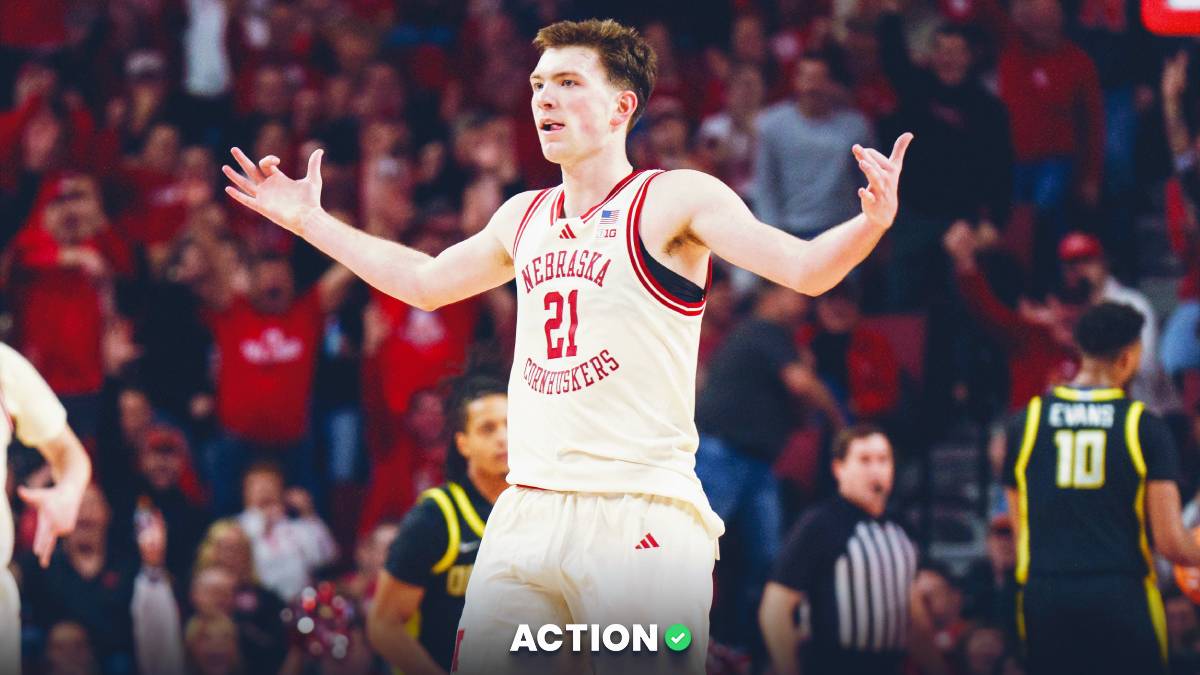
Nebraska games have a ton of 3-point variance since the Cornhuskers also allow 3-point attempts at the fifth-highest rate in the country.
Plus, unlike Illinois, which is an elite offensive rebounding team (third nationally), Nebraska doesn't really get after the glass off misses (314th), which leaves it even more vulnerable to an off-shooting night.
While Troy does attempt plenty of 3s (54th-highest rate), the Trojans aren't a very efficient outside shooting team, ranking 219th in 3-point percentage and in the 16th percentile on catch-and-shoot jumpers at an 87th-percentile frequency. Similar to Alabama, Troy wants to either take a 3 or get to the rim.
However, only South Alabama allowed a lower rim rate than Nebraska this season. Therefore, Troy will need to hit on those outside shots or else it could be a long night for the Trojans.
Meanwhile, the least 3-point-reliant offenses include:
- Arizona (26.8%)
- LIU (29.0%)
- Tennessee State (30.7%)
- Prairie View A&M (30.9%)
- Gonzaga (31.0%)
A reminder that this is just a very basic starting point for any analysis, as there can be drastic scheme differences that lead to a significantly higher or lower percentage of 3-pointers taken or allowed by design.
Lastly, I would be remiss if I didn't highlight some potential regression candidates. Over small sample sizes, extreme 3-point shooting variance can really inflate a team's metrics or vice versa.
Although please keep in mind many factors could be at play here (and the date I chose is arbitrary), such as quality of opponents, injuries, schematic shifts, lineup changes or overdue previous regression (see: Florida), but the below could provide a signal worth digging into.
Since Feb. 1, here are the hottest teams from 3 with the biggest discrepancies from their pre-Feb. 1 shooting splits, which are potential negative shooting regression candidates:
| Team | 3P% Increase | New vs. Old Percentage |
|---|---|---|
| Georgia | +7.9% | 39.6% from 31.8% |
| UNI | +7.7% | 40.0% from 32.3% |
| Ohio State | +6.7% | 40.5% from 33.8% |
| Cal Baptist | +6.2% | 37.7% from 31.5% |
| St. Marys | +5.9% | 42.6% from 36.7% |
| Florida | +5.7% | 34.7% from 29.0% |
| Howard | +5.6% | 38.1% from 32.5% |
| Arkansas | +4.7% | 42.1% from 37.4% |
| Michigan | +4.0% | 38.6% from 34.6% |
UNI and Cal Baptist could be in trouble if the outside shots stop falling, since each will have trouble scoring at the rim against their respective opponents.
And the biggest dips from beyond the arc since Feb. 1 that could be due for some big shooting nights in the near future:
| Team | 3P% Decline | New vs. Old Percentage |
|---|---|---|
| St. Johns | -7.1% | 28.7% from 35.8% |
| UCF | -7.4% | 31.8% from 39.2% |
| Hawaii | -5.4% | 28.2% from 33.6% |
| Gonzaga | -4.7% | 30.7% from 35.4% |
| Iowa State | -4.7% | 35.9% from 40.6% |
| Tennessee | -4.6% | 30.4% from 35.0% |
| Kansas | -4.4% | 32.1% from 36.5% |
| Villanova | -4.1% | 32.6% from 36.7% |
| Iowa | -3.9% | 33.4% from 37.3% |
| Troy | -3.5% | 30.7% from 34.2% |
That potential looming positive regression could be especially critical for St. John's, Troy, Iowa and UCF, considering they all have matchups against teams that allow a high volume of 3-point attempts.
Troy is at 28% over the past month, so maybe the Trojans are very due.
Moving to the defensive side of the ball, here are the teams that have seen the biggest decreases in opponent 3-point shooting percentage since Feb. 1, which means they could be potentially running a bit lucky:
| Team | Opp. 3P Decline | New vs. Old Percentage |
|---|---|---|
| Troy | -9.3% | 24.8% from 34.1% |
| Howard | -7.9% | 25.3% from 33.2% |
| Prairie View | -6.0% | 31.2% from 37.2% |
| Saint Johns | -5.9% | 27.6% from 33.2% |
| UMBC | -5.6% | 28.8% from 34.4% |
| McNeese | -4.8% | 29.4% from 34.2% |
| Queens | -4.2% | 32.9% from 37.1% |
| VCU | -4.2% | 30.6% from 34.8% |
| Lehigh | -4.0% | 30.4% from 34.4% |
On the other end of the spectrum, here are the perimeter defenses that have seen the biggest opponent upticks (potentially signaling some recent poor misfortune).
| Team | Opp. 3P Increase | New vs. Old Percentage |
|---|---|---|
| Vanderbilt | +11.0% | 39.6% from 28.6% |
| Clemson | +8.8% | 38.1% from 29.3% |
| Michigan State | +7.9% | 38.3% from 30.4% |
| Iowa | +7.6% | 38.1% from 30.5% |
| Hawaii | +7.5% | 35.1% from 27.6% |
| BYU | +7.2% | 39.8% from 32.6% |
| NC State | +6.7% | 40.1% from 33.4% |
| Saint Louis | +6.4% | 34.1% from 27.7% |
| UCLA | +6.0% | 35.7% from 29.7% |
Here are some quick takeaways:
- Many of the teams on the last list simply experienced some expected defensive negative regression.
- However, someone will eventually miss a 3 against Vanderbilt. And someone will make one against Troy.
- In terms of net 3-point percentage deltas (looking at offense – defense), the following teams have the largest positive gaps since Feb. 1: Howard (+12.8%), Texas Tech (+10.9%), Arkansas (+10.6%), Cal Baptist (+9.7%), Saint Mary's (+9.4%), UMBC (+8.9%), Lehigh (+8.4%), Michigan (+7.9%), Penn (+7.6%), Northern Iowa (+7.5%), Duke (+7.4%), Louisville (+6.3%), VCU (+6.3%), Ohio State (+6.1%) and North Dakota State (+6.0%). These are possible negative 3-point regression candidates.
- On the other side of the coin, the largest negative gaps over that span: Hawaii (-6.9%), BYU (-5.9%), Siena (-5.5%), Iowa (-4.7%) and Vanderbilt (-4.7%).
- Saint John's has been lucky on the defensive end but unlucky offensively. The opposite is true for Troy.
- Iowa and Hawaii show up on the potential positive regression list on both ends of the floor.
- Over the past month, Georgia has shot 42.8% from 3 (sixth nationally). Prior to that, the Bulldogs shot just 31.7% (287th).
- Teams that shot the 3 over 7% better at home include Saint Mary's (+9.7%), Howard (+8.0%), Saint Louis (+7.6%), McNeese (+7.4%) and Kentucky (+7.3%).

Eating Glass
If the shots aren't falling from the outside, offensive rebounds can really bail a team out in a sudden-death tournament and also obviously boost a team's shot volume profile (getting up more shots than your opponent is obviously a very good thing!).
Here's a look at the 10 tournament teams that rank in the top 20 nationally in Offensive Rebounding Rate, along with the 10 worst defensive rebounding teams in the field.
Best Offensive Rebounding Teams (all in top-15 nationally)
| Team | Rate |
|---|---|
| Tennessee | 45.1% |
| Florida | 43.1% |
| Illinois | 38.7% |
| Michigan St. | 38.4% |
| South Florida | 38.2% |
| Duke | 38.1% |
| Arizona | 38.1% |
| Virginia | 37.9% |
| Cal Baptist | 37.8% |
| Saint Mary's | 37.4% |
Tennessee and Florida are historically dominant on the offensive glass.
Worst Defensive Rebounding Teams
| Team | Rate |
|---|---|
| McNeese | 35.0% |
| Georgia | 34.8% |
| Prairie View | 34.7% |
| Queens | 33.0% |
| Alabama | 32.8% |
| LIU | 32.6% |
| Texas A&M | 32.5% |
| UCLA | 32.4% |
| Santa Clara | 32.3% |
| Utah State | 32.2% |
Some of the teams that could eat on the offensive glass in their first-round matchup:
- Illinois
- Arizona
- Florida
- Saint Mary's
- South Florida
- TCU
- UCF
Northern Iowa's packed-in defense ranks in the top 25 in defensive rebounding rate. That's key against the Johnnies.
Good luck to LIU!
Keep in mind that some of these statistics can simply be a result of a specific scheme by design, such as a zone defense naturally allowing more offensive rebound chances.
Also, some teams don't get any offensive rebounds due to a pure lack of size (see: Prairie View), but others don't in order to get back on defense to prevent transition opportunities (see: Northern Iowa).
Conversely, others are vulnerable to opponent offensive rebounds because they want to get out in transition off misses (see: Georgia). The same holds true for ultra-aggressive defenses (see: McNeese) that can get out of position going for steals or blocks.
If you're curious, the 11 teams that get out in transition at top-40 rates nationally include:
| Team | Transition Efficiency |
|---|---|
| Prairie View | 22nd percentile |
| McNeese | 96th percentile |
| High Point | 99th percentile |
| Gonzaga | 41st percentile |
| Long Island | 67th percentile |
| Saint Louis | 88th percentile |
| Georgia | 88th percentile |
| Tennessee St. | 78th percentile |
| Howard | 8th percentile |
| Arkansas | 99th percentile |
| South Florida | 41st percentile |
Michigan and VCU aren't too far behind as top-50 transition offenses in terms of frequency.
Vanderbilt's transition defense isn't great, which could hurt against McNeese. However, the 'Dores do take care of the ball at a pristine level, which could limit those opportunities anyway.
Wisconsin also doesn't turn the ball over and grades out excellent in transition defense, which could be problematic for High Point.
Kennesaw's transition defense has been tremendous, but Gonzaga has actually been much more efficient in the half-court.
Arizona has one of the best transition defenses in the country. The Wildcats also have a dominant rim defense. Those are the two ways Long Island needs to score. Again, good luck, Sharks!
Georgia will allow Saint Louis to get in transition, but the Dawgs grade out very well in transition defense.
Iowa State's transition defense can be shaky at times, but it limits transition opportunities. That's key against Tennessee State, which will need to create turnovers against the Cyclones to create consistent offense.
Hawaii has a strong transition defense, which is key against Arkansas. However, the 'Bows can't afford to turn it over too much against the Hogs, which has been a problem for them throughout the season.
USF will have plenty of opportunities to exploit Louisville's pedestrian transition defense.
For reference, here are the nine tournament defenses that rank in the top 30 nationally in lowest Transition Rates allowed:
- Northern Iowa (only Minnesota allows a lower rate)
- Iowa
- UMBC
- Purdue
- Nebraska
- Michigan State
- Saint Mary's
- Ohio State
- Clemson
Iowa and Clemson will be a half-court grinder.
Can Saint Mary's control the tempo against Texas A&M? That might be the key to the game.


